A farm pipe quotation is incomplete if it lists only diameter, length and price. You need to specify the hydraulic layout, pressure conditions, joining method, fittings, delivery requirements and documents so the order can be installed without a second purchase.
Key takeaways
- Draw the pump, zones, outlets and elevation changes before requesting a quotation.
- Size each pipe section by distance, flow and pressure—not acreage alone.
- Specify joints and materials according to buried, exposed or high-temperature locations.
- Confirm fittings, delivery terms, batch details and compliance documents before payment.
Start with the farm layout, not the acreage
Draw the field layout before you ask for a price. Mark the water source, pump outlet, field distance, elevation changes, crop rows, irrigation zones, manifold positions and every outlet.
Two farms with the same acreage can need very different pipe quantities because row spacing and zone lengths change the number of laterals, submains and take-off fittings.
Give an agricultural pipe supplier for akola this information:
1. State the application: pump suction, delivery line, buried mainline, submain, sprinkler line, drip lateral or drainage. “agricultural pipes akola” does not identify the pipe section or its duty.
2. Provide the pump discharge, outlet size, expected flow rate, operating pressure and the pressure required at sprinklers or emitters. Include the longest run and elevation difference so the supplier can assess pressure loss.
3. Show each zone’s pipe route and lengths, then request the material, diameter, wall thickness or pressure class and joint type for each section. Do not ask for one diameter based only on total acreage.
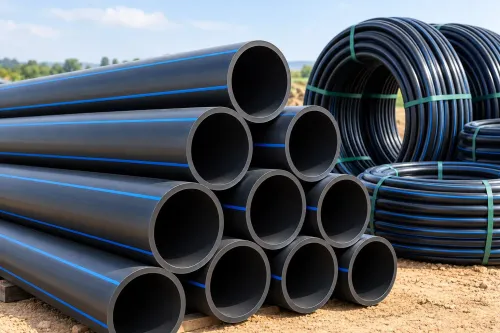
4. State whether you need rigid straight lengths or coils, the quoted length tolerance, and access for a vehicle and unloading. Ask whether transport, unloading and delivery to the farm are included.
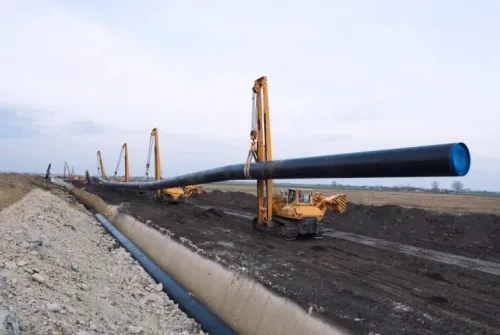
5. Describe black-soil conditions, trench depth, bedding, backfill, road crossings and tractor traffic. Request protection or installation instructions where hard clods and sharp stones could load buried pipe or move joints.
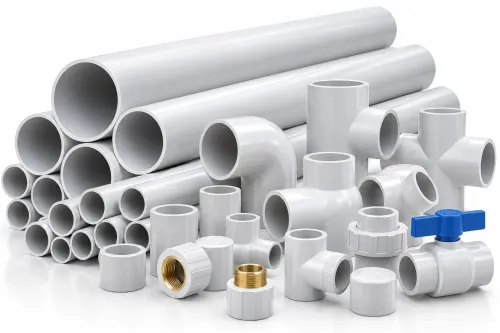
6. Ask for a complete bill of quantities: fittings, valves, filters, fertigation parts, end flushes, clamps and end caps, plus current Maharashtra Agriculture Department or MahaDBT documents if subsidy eligibility matters.
Separate each pipe section and calculate its size
A pump outlet does not determine every pipe size. Calculate each section from its flow rate, run length, elevation change and allowable friction loss, then state the pressure class and material on the order.
| Section | Size calculation | Pressure and length details |
|---|---|---|
| Mainline | Use total design flow and friction-loss calculation; increase diameter on long runs | Measure pump to farthest submain, add route bends, and rate for maximum pump pressure |
| Submain | Use the flow serving its zone, not the whole farm | Measure each zone separately and include elevation gain |
| Field line | Size for its sprinklers or outlet count and required operating pressure | Measure row length and specify the end flush point |
| Drip lateral | Use emitter flow, spacing and lateral length | Match the emitter manufacturer’s pressure range and include filtration |
| Pump suction or delivery | Match pump connection only after checking flow, lift and pressure | Order rated suction pipe, flexible connector and high-pressure delivery pipe |
Add the vertical rise to friction loss: roughly 1 bar is lost for every 10 metres of water head. A small lateral can suit a short row, while a larger mainline can be necessary even when the pump outlet is smaller.
Separate solid pressure pipe from perforated or slotted drainage pipe. Drainage pipe collects or discharges water; it cannot replace a pressure mainline. A solid pipe does not become a drainage system without designed outlets or perforations.
Write every line item with nominal diameter, total running length, wall thickness or pressure class, applicable standard, batch marking and test documents. For PE pressure pipe, check IS 4984; for unplasticized PVC water pipe, check IS 4985. Include filter grade, design flow and clean-filter and dirty-filter pressure limits for drip systems.
A quotation request for agricultural water pipe akola must name the source, flow, pump outlet, elevation change and irrigation method—not merely “farm pipe.”
Match material and joints to the installation location
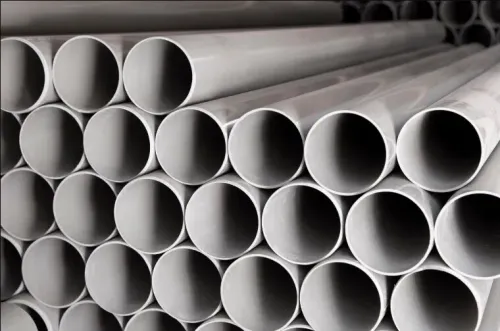
Rigid PVC suits buried, protected mainlines and submains; HDPE suits exposed runs, uneven ground and connections to movable equipment; LDPE suits flexible drip laterals. Specify the location with the material, diameter, pressure class, wall specification and joint type. An agriculture PVC pipe Akola order that says only “PVC pipe” leaves the supplier guessing.
| Material | Best location | Jointing method |
|---|---|---|
| PVC pressure pipe | Buried mainline or protected submain | Solvent-cement socket joints for compatible systems, or rubber-ring push-fit joints where the pipe system specifies them |
| HDPE pressure pipe | Exposed pump-delivery line, road crossing, rough ground or movable-equipment connection | Butt fusion or electrofusion; use flanges or approved mechanical couplings at pumps, valves and dissimilar materials |
| LDPE pipe | Drip lateral, short flexible branch or temporary surface run | Barbed take-off fittings, compression fittings and end closures; secure with clamps where the fitting design requires them |
Do not use LDPE for a high-pressure pump mainline, and do not bury flexible pipe directly on sharp stones. For PVC or HDPE in Akola’s black soil, include bedding, selected backfill and protection at tractor routes because seasonal soil movement and point loading can shift joints.
State whether each length is a rigid straight piece or a coil. For every section, list the joint count, transition fittings, operating pressure and installation location; this prevents a low-priced pipe quotation from omitting the couplings needed to connect it.
List the fittings, controls and protection needed to commission the system
An agricultural pipe order must include the fittings, controls and protection that make each pipe section usable, not just the pipe length. State the source or pump connection, rising or delivery line, mainline, submains, laterals, flow rate and operating pressure.
Order these connection items against a drawing or outlet schedule:
- Elbows, tees, reducers, unions, adaptors, clamps and threaded connectors
- Isolation valves for the pump, mainline, submains and individual field sections
- Air-release or air-vacuum valves at high points
- Washout or flushing valves at low points and submain ends
- End caps, flush ends and line drains
- Screen or disc filters sized for the flow and irrigation method
- Fertiliser injector, venturi or dosing pump with non-return protection
- Pressure gauges, pressure regulators and a pump-side non-return valve
| Component | What it prevents or controls | Where to specify it |
|---|---|---|
| Air valve | Vacuum, trapped air and air locks | Every significant high point |
| Flush valve | Sediment buildup and blocked laterals | Low ends and submain ends |
| Filter | Sand, silt and debris entering outlets | Before drip or sprinkler distribution |
| Pressure regulator | Excess pressure damaging laterals or emitters | Downstream of the filter |
Ask a farm pipe supplier Akola for quantities by location, not a vague “fittings included” note. A quotation for agricultural water pipe Akola should also state clamps, end closures, filter size, valve type and whether delivery includes unloading. Without those items, a correct pipe order can still remain uncommissioned.
Check the quotation, delivery terms and compliance documents
Compare quotations only after converting each one into a complete delivered system. A low metre rate can exclude fittings, freight, unloading or the rigid-length vehicle needed to reach the farm.
A request to an agricultural pipe supplier for Akola must name the source, application, flow, operating pressure, material, diameter, pressure class and fittings; “agricultural pipes Akola” is not a technical specification.
| Item | Quotation A | Quotation B |
|---|---|---|
| Pipe form | Straight lengths or coils; length tolerance stated | Straight lengths or coils; length tolerance stated |
| System scope | Pipe, valves, filters, take-offs, end caps and joints | Same components listed with quantities |
| Delivered cost | Transport, unloading and farm delivery included or priced separately | Same basis used |
| Performance | Material, wall thickness or pressure class and working pressure | Same figures supported by documents |
| Installation | Trench, bedding, backfill and road-crossing protection identified | Same site allowances identified |
Before accepting the agriculture PVC pipe Akola quotation, check these items against the field layout:
- Match the bill of quantities to zones, laterals, manifolds and outlet counts, not acreage alone.
- Confirm the invoice, delivery challan, batch or lot traceability and the supplier’s material and pressure-class declaration.
- Inspect diameter, length, joint type, fittings and visible damage before signing delivery.
- Ask whether the current Maharashtra Agriculture Department or MahaDBT scheme accepts the exact components; an invoice alone does not prove subsidy eligibility.
- Confirm the truck can reach the unloading point, especially for long rigid lengths.
Geeta Plasticwood Industries can be asked to state these specifications line by line, making its quotation easier to compare with another supplier’s complete delivered order.
Related products
 | Agricultural Pipes Product Details: Brand as per requirement Size/Diameter as per requirement Length of Pipe as per requirement Thickness as per requirement Material as... View product → |
 | 8 Inch Agricultural PVC Pipe 8 Inch Agricultural PVC Pipe is a strong, lightweight, and corrosion-resistant piping solution designed for efficient water flow in irrigation and... View product → |
Frequently asked questions
What should you map before ordering agricultural pipes in Akola?
Mark the water source, pump outlet, field distances, elevation changes, crop rows, irrigation zones, manifolds and every outlet.
How do you calculate the size of each agricultural pipe section?
Separate the system into sections and assess each one using its length, required flow, pressure conditions and elevation change.
Which materials and joints should you specify for a farm pipe system?
Match the pipe material and joint method to the installation location, including whether the section is buried, exposed or subject to heat and movement.
What should an agricultural pipe quotation include?
Check the pipe schedule, quantities, fittings, valves and controls, protective items, delivery terms, batch details and compliance documents.
Related products
 | 1 Inch Agricultural PVC Pipe Material PVC Shape Round Usage/Application Agricultural 1 Inch Agricultural PVC Pipe is a lightweight, durable, and corrosion-resistant pipe designed... View product → |
 | 3 Inch Agricultural PVC Pipe 3 Inch Agricultural PVC Pipe is a lightweight, durable, and corrosion-resistant piping solution ideal for irrigation and water supply in farming. View product → |
 | 3.5 Inch Agricultural PVC Pipe 3.5 Inch Agricultural PVC Pipe Usage Agricultural Material PVC Shape Round 3.5 Inch Agricultural PVC Pipe is a lightweight, durable, and corrosion-resistant pipe designed for... View product → |
 | Drip Irrigation Pipes Product Details: Pipe Diameter 16 mm Length of Pipe 300m Size/Diameter 16 mm Drip Spacing 15 cm Drip Emitter Outline Material LDPE Keeping in mind... View product → |
Keywords