Warud’s orange orchards, cotton fields, soyabean plots and vegetable farms do not all need the same irrigation layout, emitter spacing or pipe network. By checking the crop, soil, water source, field shape and pump capacity, you can decide whether drip is the right investment and specify a system that waters the farthest plant as reliably as the nearest one.
Key takeaways
- Use expandable emitter layouts as orange trees develop.
- Choose drip for targeted root-zone watering and reduced field wetting.
- Size pipes, pump flow and irrigation time from crop demand and zones.
- Check pressure uniformity, filtration, flushing points and emitter spacing.
Which Warud crops gain the most from drip irrigation?
Warud’s orange orchards usually gain the most from drip because trees remain in the field for years and need irrigation near an expanding root zone. Choose a layout that can add emitters as the canopy grows; one outlet beside each trunk will under-wet a mature tree.
The decision for drip irrigation pipe for farmers Warud depends on tree spacing, emitter discharge, pump flow, irrigation hours and field elevation.
| Crop | When drip pays | Outlet and spacing choice |
|---|---|---|
| Orange | High-value perennial crop, especially with limited water | Multiple emitters per tree; expand the wetted ring as roots and canopy grow |
| Vegetables and nursery beds | Closely planted rows need controlled, frequent wetting | 15 cm outlets can wet a continuous bed without flooding inter-row soil |
| Cotton | Depends on row spacing, soil texture, rainfall and cultivation method | Match outlets to rows; wider spacing may suit heavier soil |
| Soyabean and wheat | Seasonal rain and broad root zones can reduce the benefit | Use drip only where water is scarce, rainfall is unreliable or crop value justifies it |
Drip irrigation pipes Warud reduce inter-row wetting and deliver fertiliser through precise fertigation, but running the system beyond crop demand wastes water. Use wider-spaced outlets, point emitters or separate emitters at each plant where soil is heavy, plants are widely spaced or each root zone is distinct.
A 15 cm pattern suits closely planted beds, not every field. Base the choice on crop value, water scarcity, plant spacing, root-zone shape and your willingness to schedule irrigation.
When should you choose drip instead of flood, furrow, sprinkler or rain-gun irrigation?
Choose drip when water is limited, the field slopes, or crops need repeated root-zone watering; choose flood or furrow on level fields where broad wetting suits the crop and water is plentiful. Sprinklers or rain guns fit temporary establishment, frost protection, large-area coverage, or changing layouts better than precise delivery.
| Option | Strength | Choose it when |
|---|---|---|
| Drip | Frequent, low-volume root-zone watering | Sandy soil, sloping ground, limited water, or perennial orange orchards make controlled delivery valuable |
| Flood or furrow | Simple broad wetting with fewer components | The field is level, soil is heavy, and the crop tolerates wet inter-row soil |
| Sprinkler | Even overhead coverage | You need temporary establishment or variable crop layouts |
| Rain gun | Fast coverage across a large area | Large blocks need rapid application or frost protection matters more than precision |
Before selecting drip irrigation pipes Warud farmers should record:
- Borewell output in litres per minute, storage capacity, available electricity hours, pump reliability, field elevation, row length and row spacing.
- Heavy soil and a low-flow source: divide the field into shorter irrigation zones and allow longer soak periods.
- Low-value seasonal crops or large fields: reject drip if filtration, flushing, repairs and row changes cost more than the water or labour saved.
- Uneven orchard blocks: pressure-compensating emitters reduce elevation-related discharge variation, but cost more and still require filtration, correct pressure and regular flushing.
Drip irrigation pipes in Warud make the strongest case for perennial orchards and scarce-water farms, but poor scheduling defeats the saving: running the system too long still wastes water.
How do you size the pipe network, pump and irrigation time?
Start with the zone, not the pipe diameter. Measure plot length and width, record elevation changes, and draw each plant row before choosing the pump or lateral.
1. Count the rows and assign one lateral to each row, unless an orange tree layout needs two or more lines. For oranges, use tree spacing, planned emitters per tree, trunk-to-emitter distance and future canopy growth to position delivery points beyond the trunk’s immediate base.
2. Count total outlets in the zone. Multiply outlets by emitter discharge: 600 emitters at 4 litres per hour require 2,400 litres per hour, or 40 litres per minute.
3. Divide zone demand by the pump’s available flow. A 40-litre-per-minute zone needs a pump that can deliver that flow at the required pressure, not merely a motor with a stated horsepower.
4. Calculate irrigation time from crop demand. If the zone must deliver 12,000 litres, a 40-litre-per-minute flow requires 300 minutes; split the zone when that duration exceeds available electricity hours.
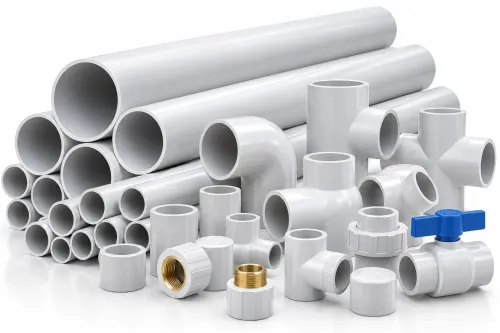
5. Build the head unit in order: pump connection, isolation valve, screen or disc filter, pressure gauges before and after the filter, fertigation tank, pressure regulator, mainline, submains and laterals. Add air-release valves at high points, flush valves at line ends and end caps.
A 16 mm lateral is acceptable only after checking row length, entering flow, friction loss, elevation and allowable inlet-to-end pressure variation. Size the pump from total dynamic head: elevation plus pipe friction, filter and valve losses, and emitter operating pressure.
What specifications and field checks prevent uneven watering?
Reject any quotation that gives only “16 mm” or “ISI quality.” Before accepting the system, demand specifications that identify the component, its pressure capability and its intended location.
1. Request emitter discharge in litres per hour, operating pressure range, filtration grade, allowable pressure variation, pipe outside diameter, wall thickness or pressure class, material designation, working-pressure rating, dimensional tolerance, and coil or straight-length format.
2. Confirm the quotation names the applicable standard: IS 12786 for polyethylene irrigation laterals, IS 13488 for emitters, IS 4984 for polyethylene water-supply pipes, or IS 4985 for unplasticized PVC water-supply pipes. “ISI quality” alone proves nothing without the matching standard and test report.
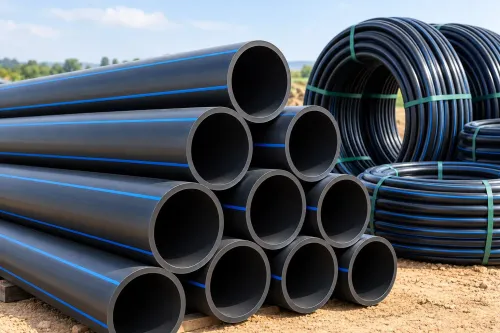
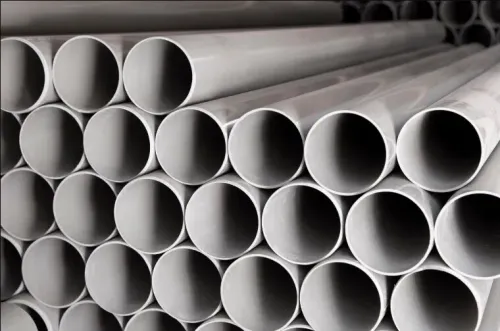
3. Match materials to the job. Flexible polyethylene laterals follow crop rows and are easy to replace; rigid PVC mains and submains hold alignment and suit buried runs. Check fitting compatibility, sunlight exposure, burial depth and protection from tractors and farm traffic. A supplier offering irrigation PVC pipe in Nagpur should state these limits.
4. Commission the system in this order:
- Flush mains and submains before opening or connecting laterals.
- Flush every lateral end until discharge is clean.
- Measure pressure at the inlet and far end of representative rows.
- Compare the readings with the specified allowable pressure variation.
- Inspect filters, gauges, air-release valves and buried lines after the first operating cycle.
Plastic chips, soil and sealant debris left after installation can block emitters quickly. Unequal end pressure then produces visibly different crop growth.
How should Warud farmers compare suppliers and the final cost?
Compare the complete installed system, not the cheapest pipe. A Nagpur supplier is suitable only if it can match your Warud field’s water quality, pressure, row layout, service needs and spare-parts access.
| Option | Compare | Why it affects final cost |
|---|---|---|
| Pipe package | Pressure class, wall thickness, fittings and compatible valves | An unsuitable joint or rating creates leaks and replacement work |
| Filtration | Filter type and grade matched to sand, silt, algae or iron deposits | Clogged emitters destroy pressure uniformity |
| Installation | Written hydraulic layout, zone sizes and pump requirements | A cheap design can deliver uneven flow across rows |
| Testing | Inlet and far-end pressure readings after flushing | You need evidence that the installed system performs |
| After-sales | Warranty, replacement emitters, service distance and spares | Downtime during a crop cycle costs more than a small initial saving |
Request pipe outside diameter, material designation, working-pressure rating, dimensional tolerance and coil or straight-length format. Also request test documentation, field-commissioning records and protection details for exposed pipe, buried joints and crossings used by farm traffic.
Geeta Plasticwood Industries is an agriculture PVC pipes manufacturer in Nagpur that a buyer could approach for agricultural PVC requirements, but the layout must decide whether PVC belongs in the buried mainline or submain and whether polyethylene laterals suit the rows. Compare several PVC pipe suppliers in Nagpur on the same specification.
Before counting Maharashtra assistance, verify current agriculture-department rules, approved components, eligibility, area limits and rates. Treat the purchase as viable when crop value or water scarcity justifies scheduled root-zone irrigation and the supplier documents performance for your actual field.
Related product
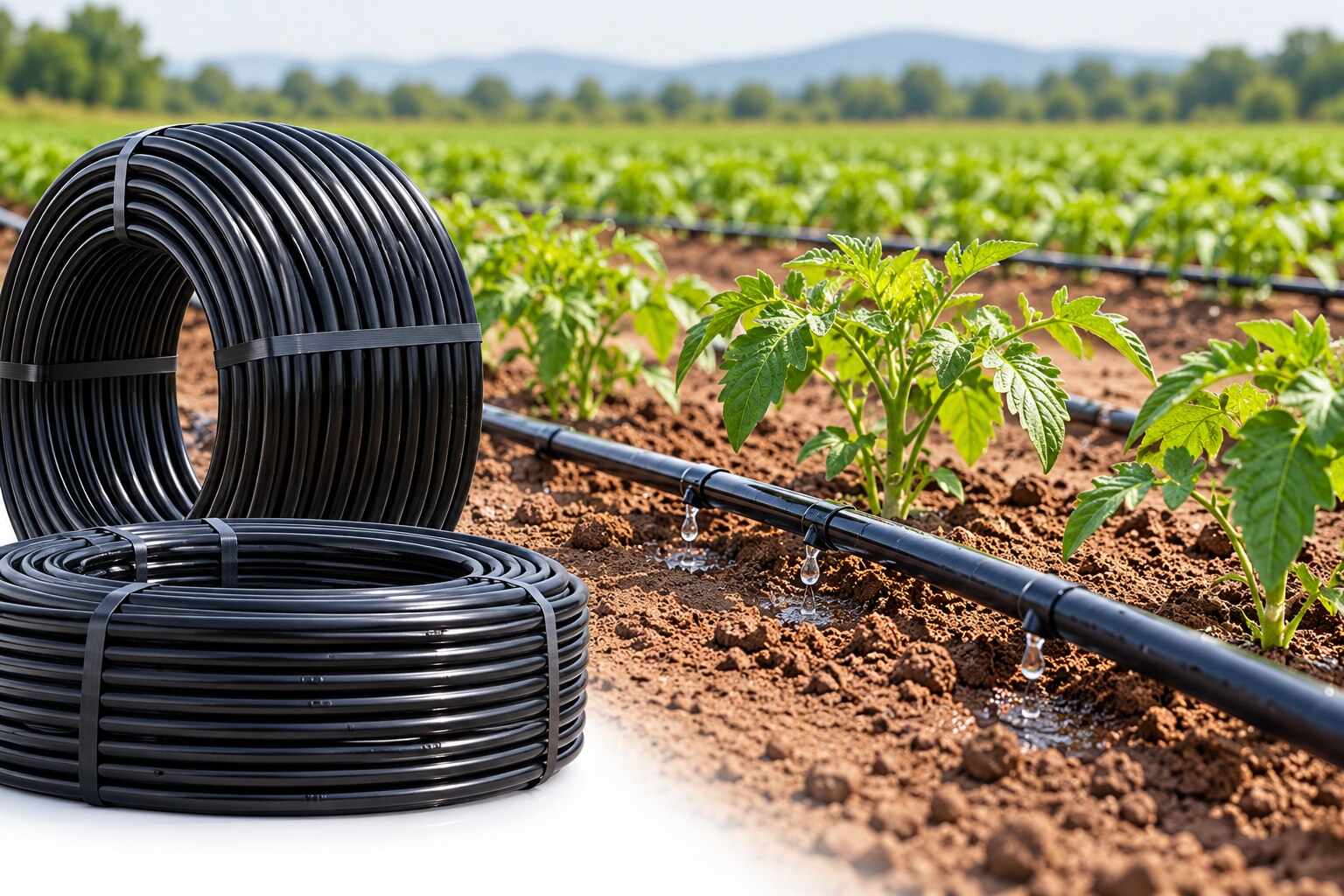
 | Drip Irrigation Pipes Product Details: Pipe Diameter 16 mm Length of Pipe 300m Size/Diameter 16 mm Drip Spacing 15 cm Drip Emitter Outline Material LDPE Keeping in mind... View product → |
Frequently asked questions
Which Warud crops gain the most from drip irrigation?
Orange orchards benefit strongly because trees stay in place for years and need water around an expanding root zone. Vegetables, grapes and other high-value row crops also suit drip when precise watering matters.
When should Warud farmers choose drip instead of flood, furrow, sprinkler or rain-gun irrigation?
Choose drip when you need root-zone application, separate crop zones or controlled fertigation. Flood and furrow systems suit level fields with abundant water; sprinklers and rain guns suit broader surface coverage, cooling or crop establishment.
How should farmers size the pipe network, pump and irrigation time?
Divide the farm into zones, total the emitter discharge in each zone, then select a pump that supplies that flow at the required operating pressure after pipe and filter losses. Set runtime from crop water demand and emitter output.
What field checks prevent uneven watering through drip irrigation pipes?
Check filter capacity, pressure at the first and last laterals, emitter spacing, lateral length, flushing ends and leaks. Run the system and compare catch volumes from emitters at different points.
How should Warud farmers compare drip pipe suppliers and final cost?
Compare pipe diameter, wall thickness, emitter discharge, pressure rating, filtration, fittings, installation, warranty and replacement support. Request a complete bill of materials rather than comparing pipe price alone.
Keywords