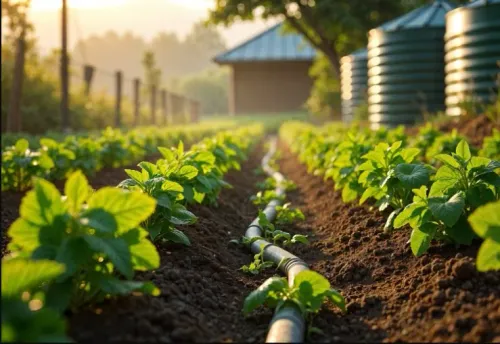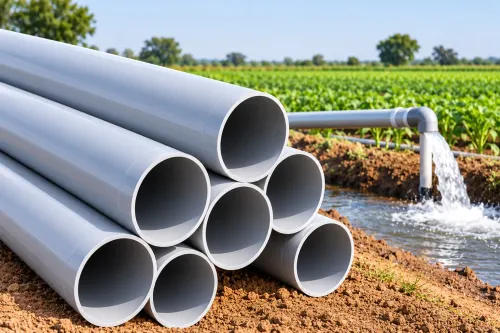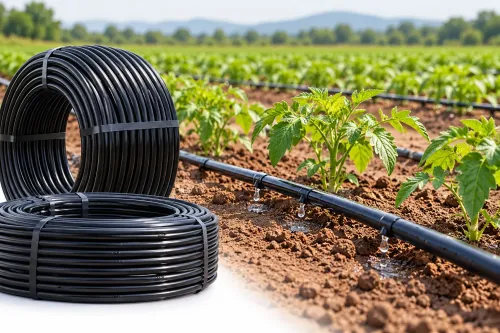
A contractor searching around Mouda needs more than a nearby stockist: the pipe, fittings, pressure class, joint system, and delivery terms must work as one irrigation network. By checking dimensions, hydraulics, documents, installation controls, and supplier capability in that order, you can turn a local quotation into a specification you can defend.
Key takeaways
- Demand diameter, pressure class, IS 4984 or IS 13592 reference, and batch details.
- Use 2-inch lines for lower flows and 3-inch lines when flow loss demands it.
- Check design flow, total head, pump pressure, and surge before choosing pipe class.
- Inspect solvent joints, supports, flushing, and pressure-test records before commissioning.
What to verify before accepting a Mouda UPVC quotation
Before accepting a quotation, require enough detail to compare pvc pipes and fittings mouda on specification rather than price. A line reading only “PVC pipe” is incomplete. For rigid PVC-U pressure pipe used for water supply, ask for:
- IS 4985 compliance, nominal outside diameter (OD), wall thickness, pressure class, and temperature basis;
- The manufacturer’s dimensional table, batch number, test certificate, and lot-traceability record;
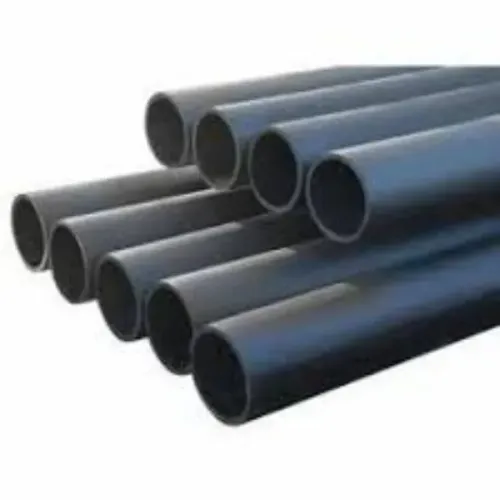
- Actual OD for the marketed 2-inch size: it is commonly around 63 mm, but the table must confirm it;
- Delivery lot identification and replacement availability for the quoted size and class.
| Joint system | What to confirm | Compatibility warning |
|---|---|---|
| Solvent-weld | Pipe OD, socket depth, compatible primer and cement | Nominal size alone does not ensure fit |
| Elastomeric-ring | Spigot, socket, gasket profile, and insertion depth | Do not substitute a solvent-weld fitting |
| Threaded | Thread standard, size, and transition material | Threaded parts need not match pressure pipe dimensions |
| Flanged | Flange drilling, gasket, bolts, and adaptor | Check the complete flange assembly |
| Mechanical | Coupler range, restraint, and pressure rating | Confirm suitability for PVC-U and operating pressure |
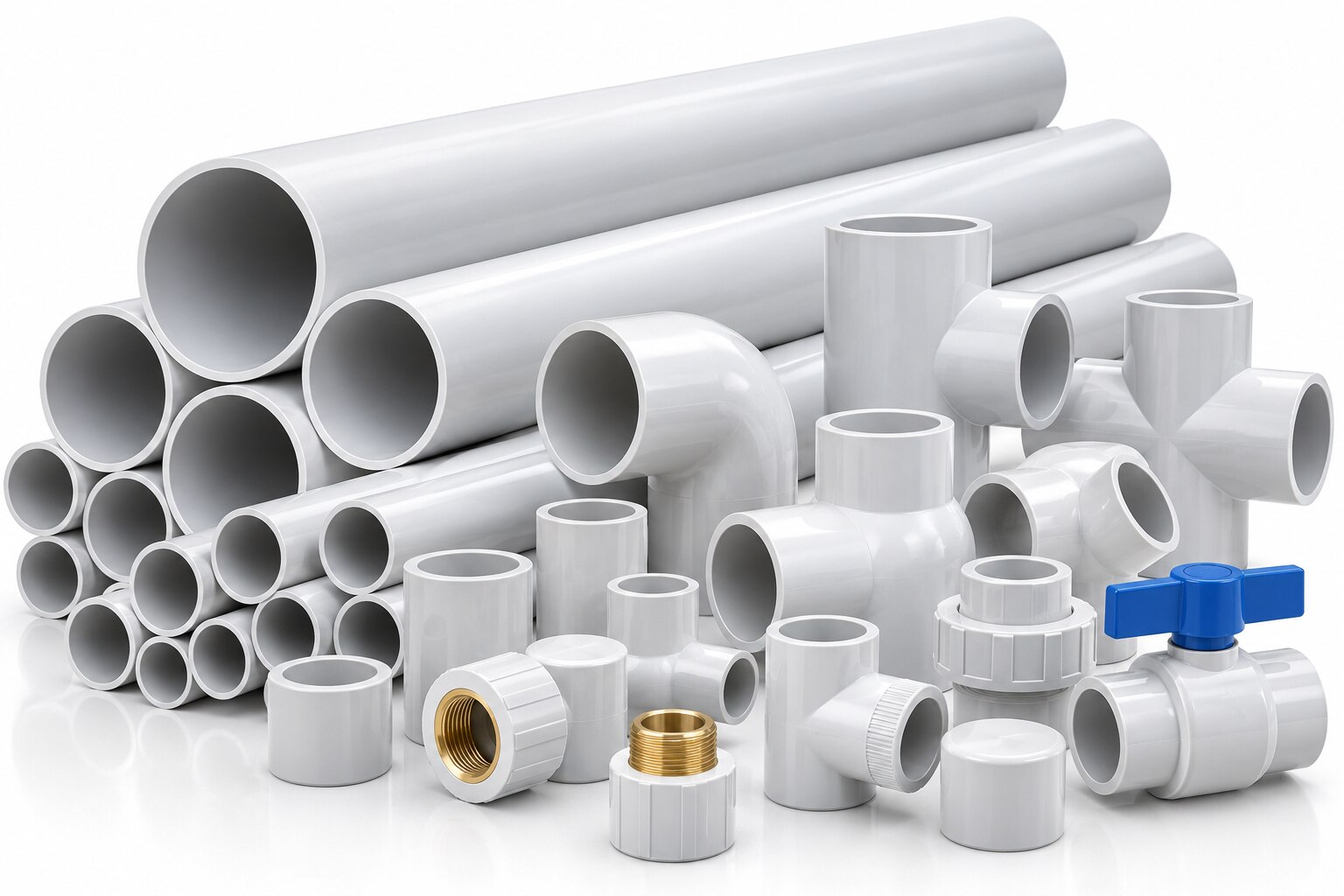
Specify sockets, 45-degree and 90-degree elbows, tees, reducers, end caps, unions, isolation valves, check valves, flanges, pump adaptors, filter connections, and threaded or grooved transition pieces where required. Pipe and fittings must use the same dimensional and joint system.
Reject drainage or sewer pipe as a substitute for pressure-rated irrigation pipe. Also confirm PVC-U, not CPVC: their temperature ratings, dimensions, and joining systems are different.
Where 2-inch and 3-inch lines belong in an irrigation layout
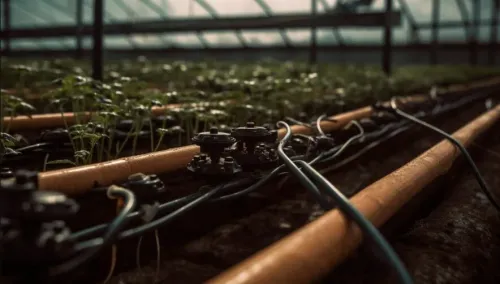
A 2-inch line usually belongs on a branch or submain, while a 3-inch line is more useful on a high-flow main or a long run where friction loss would consume pressure. Diameter alone cannot decide the layout; compare required flow, distance, elevation and pressure at the outlets.
1. Start at the source with the suction arrangement, pump connection and pump outlet. Keep suction separate from pressure delivery: rigid pressure pipe is not automatically suitable for suction. Confirm collapse resistance, air-tight joints, pump-manufacturer requirements and suction lift before using UPVC.
2. From the pump outlet, run the delivery main to the filter and non-return valve, then continue into the irrigation mainline. A 3-inch pipe can reduce friction on a high-flow or lengthy main; select it only after checking the pump discharge and pressure loss.
3. Take a 2-inch branch into a submain when its flow demand and calculated pressure loss remain acceptable. Use a valve assembly at each irrigation zone, then reduce to field laterals or connect to a sprinkler manifold.
4. Read the layout as: source, suction pipe, pump, pump connection, delivery main, filter, non-return valve, mainline, tee, reducer, submain, isolation valve, union, lateral or manifold, and end cap.
5. For a search such as “2 inch upvc pipe mouda”, confirm that the pipe is pressure-rated for irrigation delivery. Ask for its actual outside diameter, wall thickness, pressure class and test documents; do not accept plumbing-only, gravity-flow, drainage or sewer pipe.
How to size the pipe and check pressure safely
Do not choose the cheapest inch size. Select diameter and pressure class from the duty the line must perform.
Ask for:
- Pump discharge in litres per minute or cubic metres per hour
- Total pipe-run length and elevation change
- Required pressure at the outlet
- Required flow at each lateral or sprinkler
- Number and type of fittings
- Filter pressure loss
- Operating temperature and pump operating pressure
Compare the resulting velocity and friction loss for each internal diameter. Add static head from elevation, filter loss, and minor losses from elbows, tees, valves, reducers, and entrances. The total gives the pump discharge pressure required; select a pipe whose working-pressure rating also includes a surge allowance.
A quotation must state the pressure unit and test basis. 3 kgf/cm² is approximately 2.94 bar, while 4 kgf/cm² is approximately 3.92 bar. “kg/sq2” and “kg/sqcm” are inadequate specifications.
Working pressure is not surge pressure. Fast valve closure, pump start-stop events, long rising mains, and trapped air can create water hammer above steady pressure. Use controlled valve operation, a surge allowance, and air-release points at high locations.
| Schedule | Wall, bore and pressure implications | Practical trade-off |
|---|---|---|
| Schedule 40 | Thinner wall, larger internal diameter, lower mass and cost; lower pressure capacity | Solvent welding is straightforward when dimensions match |
| Schedule 80 | Thicker wall, smaller internal diameter, greater mass, cost and pressure capacity | Verify the Schedule 80 designation against the dimensional table and pressure rating before ordering |
How to compare a UPVC manufacturer or supplier near Mouda
“Available near Mouda” means more than a nearby pin on a search result. Confirm the dispatch point, delivery radius, lead time, and whether the supplier can deliver the complete matched system to your site. A search for “UPVC pipe manufacturer Mouda” or “PVC pipes and fittings supplier Mouda” proves proximity, not suitability.
| Search result | Evidence to request | Decision |
|---|---|---|
| UPVC pipe manufacturer Mouda | Exact location, delivery radius, stock by size and pressure class | Accept only if transport timing works |
| PVC pipes and fittings supplier Mouda | Written quotation, minimum order, cut-length policy, replacement terms | Reject vague availability |
| Any listed supplier | Authorised technical contact and payment terms | Record who can confirm specifications |
Request these details before placing an order:
- IS 4985 documentation where applicable, plus the nominal outside diameter, wall thickness, pressure class, dimensional table, and temperature basis.
- Fitting standards, joint type, solvent-cement compatibility, and confirmation that sockets, elbows, tees, reducers, end caps, unions, valves, flanges, pump adaptors, and filter connections are all available.
- Batch or lot identification, hydrostatic test records, test certificates, and replacement arrangements for damaged or mismatched items.
- Transport responsibility, unloading responsibility, dispatch date, minimum order, cut lengths, and payment milestones.
A supplier that offers pipe but cannot confirm the complete fitting set leaves your installation exposed to incompatible joints and delayed commissioning. Assess Geeta Plasticwood Industries by requesting a project-specific quotation naming each pipe size, pressure class, fitting, delivery destination, and document required; catalogue labels alone do not establish a matched system.
Related products
 | 3 Inch Agricultural PVC Pipe 3 Inch Agricultural PVC Pipe is a lightweight, durable, and corrosion-resistant piping solution ideal for irrigation and water supply in farming. View product → |
 | 2 Inch UPVC Pipe Product Details: Length of Pipe 3 m Size/Diameter 2 inch Working Pressure 3 kg/sq2 Usage/Application Plumbing Pipe Class Schedule 80 Color White 2... View product → |
Installation, joining and commissioning controls for the farm line
A pressure-rated pipe can still fail if the trench, joints, or supports are wrong. Treat the soil around buried PVC-U as part of the structural system: provide enough trench width to place and compact material beneath and beside the pipe.
1. Prepare a stable trench bottom and place suitable bedding. Set the pipe on continuous support, not stones or hard spots. Place embedment evenly, then compact haunching beneath both springlines; poor side support allows deflection even when the pressure rating is adequate.
2. Assemble solvent-weld joints with clean, dry, square-cut pipe ends. Use compatible cement and primer where specified, insert the pipe fully with the required twist, and allow the complete cement manufacturer’s cure time before pressurisation.
3. Restrain tees, reducers, bends, valves, and end caps. Internal pressure produces unbalanced forces at each change in direction or termination, so use designed restraint or correctly sized concrete thrust blocks. Tightening a joint is not a substitute.
4. Support exposed runs against sagging and unsupported spans, shield them from prolonged sunlight, and protect them from vehicles, tools, and accidental knocks. A buried installation provides protection that an open farm crossing does not.
5. Flush soil and swarf from the line, confirm air-release points, isolate the test section, and pressure-test it at the project-specified pressure and duration. Never exceed the lowest-rated pipe, valve, fitting, or connection. Record results against supplier documents and installed batch markings before handover, especially when buying from a pvc pipes and fittings supplier mouda.
Frequently asked questions
What should you verify in a UPVC quotation near Mouda?
Ask for nominal diameter, pressure class, applicable BIS standard such as IS 4984 or IS 13592, fitting specifications, quantity, batch details, taxes, delivery terms, and warranty conditions.
Where should 2-inch and 3-inch UPVC lines be used in irrigation?
Use 2-inch lines for lower-flow branches and shorter runs. Choose 3-inch lines for higher flow, longer mains, multiple outlets, or layouts where reducing friction loss matters.
How do you size UPVC irrigation pipe and check pressure safely?
Calculate design flow, friction loss, elevation change, pump head, and operating pressure. Select a pressure class that exceeds working pressure and account for water hammer during valve closure.
How should you compare a UPVC manufacturer or supplier near Mouda?
Compare standard compliance, pressure-class markings, dimensional consistency, fitting compatibility, traceability, technical support, delivery reliability, and documented replacement terms instead of comparing price alone.
What controls are needed before commissioning a farm UPVC line?
Prepare clean square cuts, compatible solvent cement, correct insertion depth, adequate curing time, proper supports, open-end flushing, gradual filling, and a recorded pressure test before operating the line.
Related products
 | 3.5 Inch Agricultural PVC Pipe 3.5 Inch Agricultural PVC Pipe Usage Agricultural Material PVC Shape Round 3.5 Inch Agricultural PVC Pipe is a lightweight, durable, and corrosion-resistant pipe designed for... View product → |
 | 8 Inch Agricultural PVC Pipe 8 Inch Agricultural PVC Pipe is a strong, lightweight, and corrosion-resistant piping solution designed for efficient water flow in irrigation and... View product → |
 | 3 Inch UPVC Pipe Size/Diameter 3 Inch Working Pressure 4 kg/sq2 Usage/Application Industrial Pipe Class Schedule 40 Color White 3 Inch UPVC Pipe is a type of rigid... View product → |
 | Pvc Suction Pipe Product Details: Size/Diameter 0.5 inch Length of Pipe 3m Packaging Type single bundle packing Thickness 1.5 mm Material PVC Working Pressure 2.5... View product → |
Keywords