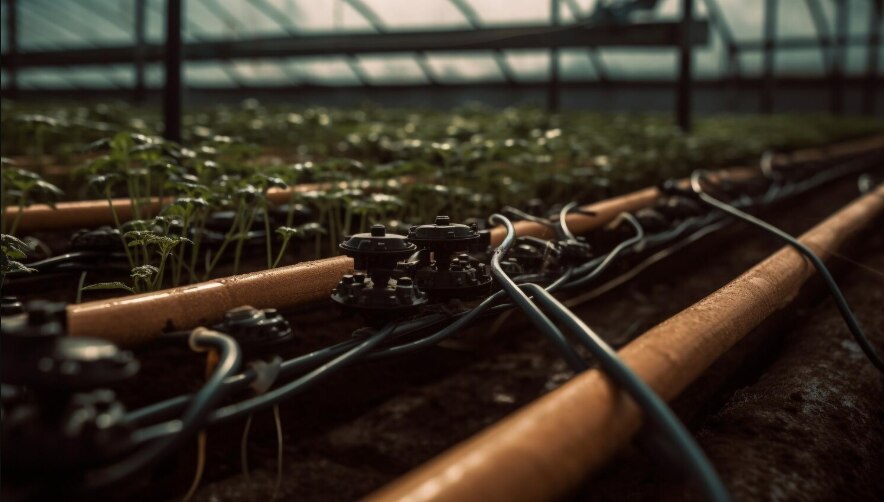
The right purchase depends on more than the price of a pipe roll: you need enough late-season water, a suitable crop and soil, reliable pressure, and a complete installation. By the end, you can estimate the required layout, compare total ownership costs, test whether drip suits your farm, and evaluate an Amravati supplier’s offer.
Key takeaways
- Choose drip first for citrus, vegetables and fruit crops with high water or pumping costs.
- Match emitter spacing and pipe length to crop rows, soil and field dimensions.
- Price filters, fertigation, pumps, valves, flushing and replacement parts—not pipe alone.
- Check a supplier’s specifications, samples, batch records and after-sales support before ordering.
When drip irrigation pays on an Amravati farm
Drip pays on an Amravati farm when limited water, costly pumping or high crop value can repay the complete installation. Citrus orchards, vegetables and fruit crops are stronger candidates than rain-fed cotton or soybean, where low annual irrigation demand can make recovery slower.
Amravati receives most rainfall during the southwest monsoon, but irrigation dependence rises through the dry season. Check well yield, storage capacity, pumping hours and late-season water availability before buying; an empty well cannot deliver drip pipe benefits.
The question “are drip irrigation pipes for worth buying in amravati” has no universal payback answer. Calculate using:
- Farm area and crop value per hectare
- Irrigation schedule and expected seasons of use
- Actual water supply and electricity or diesel cost
- Labour saved, weed suppression, and protection of yield or fruit quality
- Installation effort, repairs, replacement needs and service life
- Current subsidy eligibility, crop ceiling and approved specifications
| Option | Strength | Cost or limitation |
|---|---|---|
| Drip | Delivers water to roots, reduces inter-row weeds and labour, and protects quality during dry spells | Needs filtration, pressure control, maintenance and careful installation |
| Flood or furrow | Low equipment cost and simple operation | Greater distribution loss, weed growth and field labour |
| Sprinkler or rain-gun | Covers broad areas and suits some field crops | Higher pumping demand, wind drift and evaporation exposure |
Pilot one block first. Measure pressure uniformity, wetting depth, clogging and labour. Farm irrigation Amravati decisions become defensible only after comparing those results with the whole-farm cost, not the lateral price alone.
Match emitter spacing and pipe length to the crop and field
A 15 cm emitter spacing suits closely planted vegetables with shallow, uniform root zones, but it is not a default choice for every crop. Cotton, soybean and wheat usually need wider spacing or a different emitter design; mature orange orchards need emitters arranged around the expanding root zone, not a continuous close-wetted strip.
Black cotton soil adds risk. Its clay content, shrink–swell movement and slow infiltration when compacted can make closely spaced emitters overlap, causing runoff or prolonged saturation. For drip irrigation pipes Amravati farms, match emitter spacing to soil texture, crop rows and root depth, then test wetting before approving the layout.
Use this calculation:
- Lateral length = planting-row length.
- Total lateral pipe = row length × number of planting rows.
- Number of rows = usable field width ÷ row spacing, rounded down after excluding headlands, access lanes and irregular edges.
Do not approve 16 mm solely from its diameter. Require the supplier to verify emitter discharge, operating pressure, allowable lateral length, elevation change, zone flow and pressure uniformity. A long lateral or uneven field can leave distant plants under-watered while nearby emitters discharge too much.
Young citrus trees need an expandable arrangement: replaceable take-offs or added emitters can enlarge the wetted area as roots spread. For annual crops, surface or removable laterals simplify inspection, flushing, relocation and repair. Those practical drip pipe benefits can outweigh the lower accidental-damage risk of buried lines.
Build the complete system and prevent the failures that stop water flow
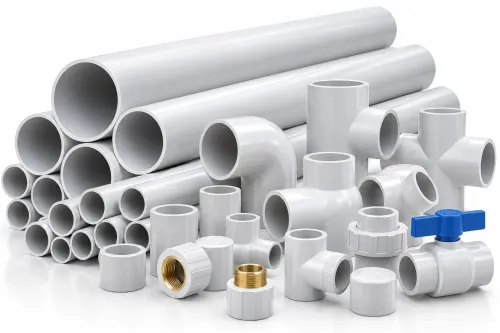
Buying a lateral alone will not deliver reliable farm irrigation Amravati water flow. Build the route from pump connection to filter, pressure regulator or control valve, pressure gauge, fertigation unit, mainline, submain, header, take-off connectors, field laterals, end caps and a flush line. Add air-release protection at high points where air locking threatens flow.
- Use agricultural PVC or HDPE for the mainline, submain and header. Use the specified emitter lateral for crop rows; do not treat rigid conveyance pipe as the emitter line.
- Select filtration for suspended soil, algae, dissolved salts and the smallest emitter passage. Around 120-mesh screen or disc filtration is only a starting point when the lateral manufacturer permits it.
- Inspect operating pressure and filter differential during every irrigation cycle. Clean a loaded filter, flush lateral ends on a planned schedule, and correct water chemistry before fertilizer precipitation or salt blockage develops.
Clogged emitters need filtration and flushing, not higher pump pressure. Leaking take-offs need compatible grommets; rodents need protective covering and immediate repairs. Excessive pressure needs regulation, rough soil needs levelling or careful placement, and machinery crossings need burial, marked routes or removable lines. Correct inadequate burial depth before cultivation damages the pipe.
These controls deliver the practical drip pipe benefits: uniform watering, lower waste and fewer emergency repairs. Without them, a cheaper installation can become an expensive blocked-line problem.
Compare total installed cost before choosing drip over other irrigation
Judge the full farm bill, not the lateral’s per-metre price. For “Are drip irrigation pipes for worth buying in Amravati?”, calculate value from water, labour, crop response and service life; farm irrigation Amravati also depends on well yield and dry-season pumping.
Use this worksheet for one block or the whole farm:
- Hardware: laterals, mainline, submain, pump connection, filter, regulator, gauges, valves, fertigation equipment, end caps and connectors.
- Ownership: installation labour, electricity or diesel, filter-cleaning time, repairs, rodent or machinery damage, replacement laterals and expected service life.
- Benefits: lower water use, fewer weeding hours, crop-quality or yield protection, and any verified subsidy.
| Option | Cost and operating trade-off | Best fit |
|---|---|---|
| Flood or furrow | Lowest equipment cost; higher distribution losses, labour and weed growth | Cheap water and simple fields |
| Drip | Higher installation cost; controlled delivery and lower wetted area | High-value crops or limited water |
| Sprinklers or rain-guns | Broad coverage; higher pumping demand, wind drift and evaporation exposure | Cover crops or irregular short-term irrigation |
Drip is the wrong choice when inter-row cultivation is frequent, water is severely silt-laden without dependable filtration, irregular plots force excessive lateral lengths, or the source cannot provide design pressure and flow. Test a pilot block before expansion: record pressure uniformity, filter-cleaning frequency, wetting depth, clogging, labour and crop response.
Treat subsidy as a variable. Verify current MahaDBT and Maharashtra agriculture-department rules for farmer category, crop ceiling, approved specifications and vendor process; never subtract assumed assistance from the quotation.
How to assess a drip irrigation pipe supplier in Amravati
Ask an irrigation pipe supplier in Amravati for documents and site checks, not a per-metre quote alone. A complete offer prevents you from receiving laterals without the filter, fittings, valves or repair support needed to operate them.
1. Request a field-specific design and written bill of materials covering mainline, submain, filter, regulator, valves, connectors, end flushes and laterals. The offer must state outside diameter, wall thickness, emitter discharge, pressure range, allowable lateral length, UV stabilisation and filtration requirement.
2. Confirm available stock, batch or manufacturing identification, delivery date and installation responsibility. Ask whether the supplier will supply compatible grommets, take-offs, end caps and replacement laterals during the irrigation season.
3. Make the supplier mark elevation changes, flushing points, machinery paths and zones on the layout. Ask how the design will expand when young citrus becomes a larger orchard, rather than forcing today’s lateral lengths onto tomorrow’s root zones.
4. A 300 m roll reduces joints and labour on straight rows. On small or irregular plots, it can create storage, handling, unused-pipe waste and difficult replacement problems.
5. Check after-sales support for fittings, leaks, clogged emitters and rodent or cultivation damage. Compare drip irrigation pipes in Amravati, including Geeta Plasticwood Industries, only after checking the proposed pipe, fittings and design against these documents and your measured field conditions.
Purchase when the complete design meets pressure, filtration and crop requirements, and whole-farm cost is justified by measured water, labour or crop benefits.
Related product
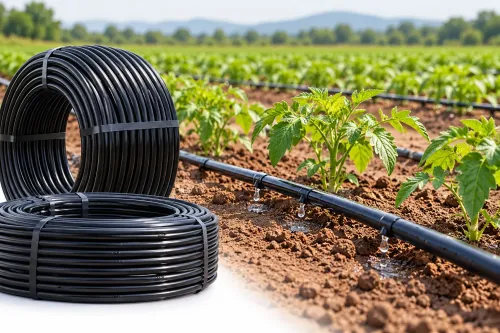
 | Drip Irrigation Pipes Product Details: Pipe Diameter 16 mm Length of Pipe 300m Size/Diameter 16 mm Drip Spacing 15 cm Drip Emitter Outline Material LDPE Keeping in mind... View product → |
Frequently asked questions
Are drip irrigation pipes worth buying for farms in Amravati?
They are strongest candidates for citrus, vegetables and fruit crops when water is limited, pumping is expensive or crop value is high. Rain-fed cotton and soybean can take longer to repay the installation.
How do you choose drip pipe spacing and length for a farm?
Match emitter spacing to crop spacing, root spread and soil texture. Size each lateral for its row length and confirm the pipe’s flow rate, pressure range and recommended maximum run.
What parts are needed besides drip irrigation pipes?
A complete system needs a pump or elevated source, mainline, submain, filter, pressure regulator, valves, connectors, end flush points and a fertigation unit when fertiliser is injected.
How should you compare the total cost of drip irrigation?
Include pipes, filtration, pump changes, fittings, installation, land preparation, flushing, seasonal repairs and replacement parts. Compare that total with expected water, energy, labour and yield benefits.
How can you assess a drip irrigation pipe supplier in Amravati?
Ask for written specifications, emitter performance data, material and batch details, a sample, delivery terms, warranty conditions and local technical support. Confirm that the pipe suits your water quality and operating pressure.
Keywords