Utility contractors in Pandhurna must match pipe construction, pressure capacity and joining method to hot surfaces, shifting ground, rocky trenches and mixed water or utility duties. By the end, you will be able to screen a 110 mm proposal, compare HDPE with competing materials, plan installation controls and request the documents needed for a defensible purchase.
Key takeaways
- Use HDPE where ground movement, rocky soil or road crossings threaten rigid pipes.
- Check 110 mm pipe duty against pressure, flow, SDR and installation conditions.
- Choose butt fusion or electrofusion based on access, equipment and crew skills.
- Demand traceability, test records, standards and jointing support before awarding work.
Which Pandhurna utility conditions make HDPE a practical choice?
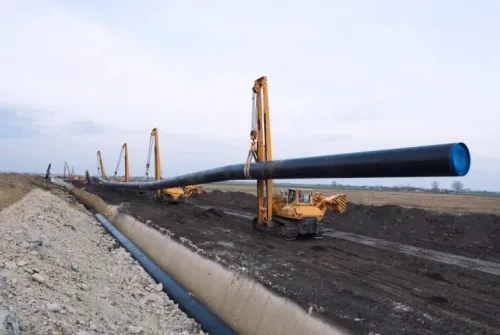
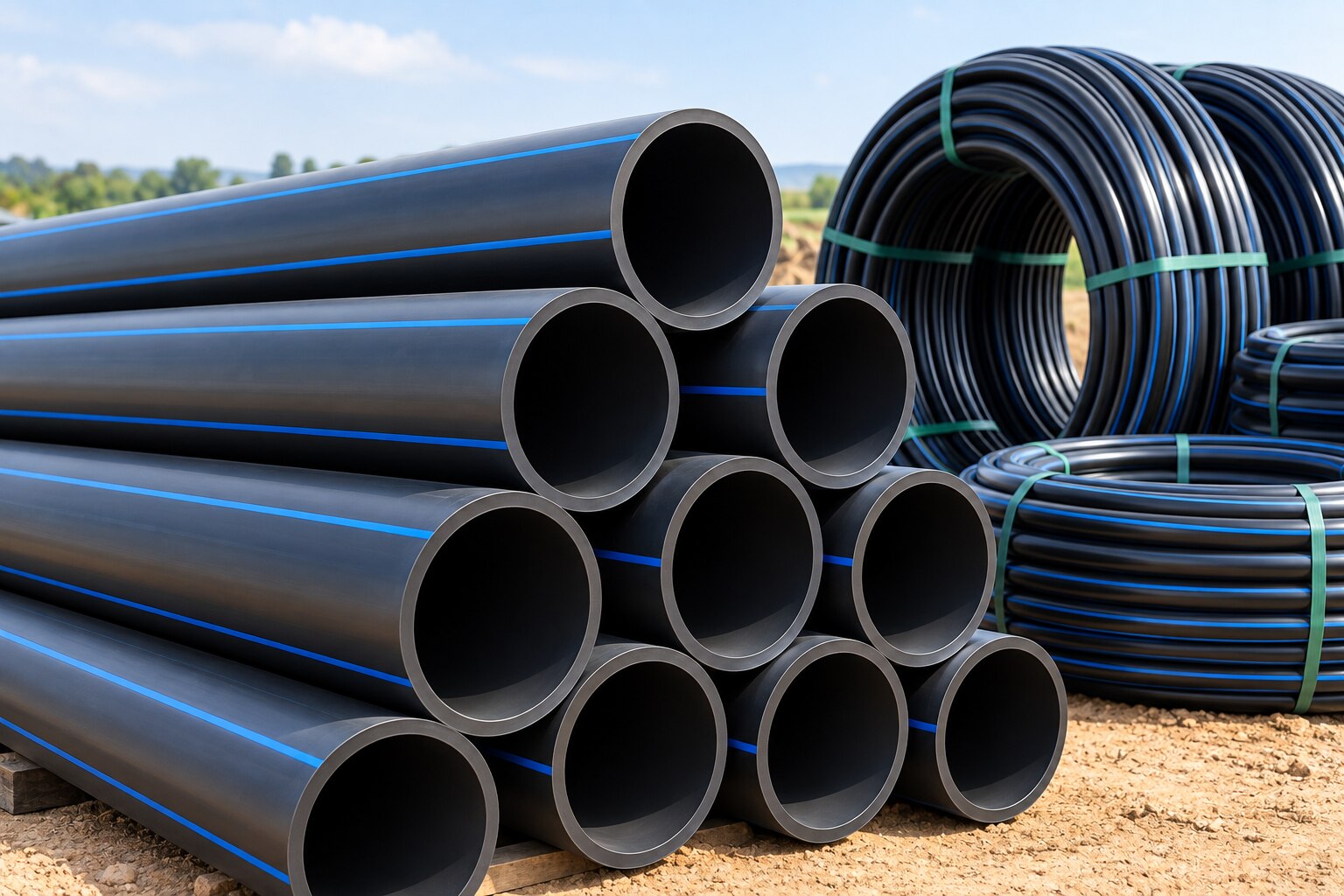
HDPE is practical in Pandhurna where seasonal ground movement, rocky soil, trench settlement or road crossings could strain a rigid pipe. Its flexibility absorbs moderate alignment changes, while impact resistance reduces damage during transport, lowering and backfilling. Butt-fused or electrofused joints also reduce the number of potential leak points.
These are the main benefits behind searches for hdpe pipe pandhurna and hdpe pipe for benefits pandhurna.
Suitable applications include:
- Potable-water mains and pump rising mains
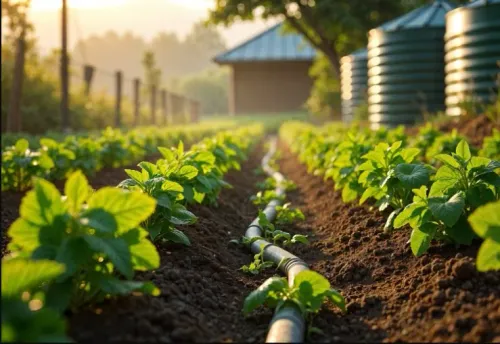
- Irrigation distribution
- Drainage and sewer lines
- Industrial water
- Cable protection
- Temporary bypass lines
| Pandhurna condition | HDPE advantage | Check before approval |
|---|---|---|
| Hot exposed surface | Lightweight installation and continuous joints | Apply temperature derating; check thermal expansion, support and pressure capacity |
| Salty soil or agricultural chemicals | Resists corrosion from many salts and aqueous chemicals | Verify the exact chemical, concentration, temperature, exposure time and stress against a compatibility table |
| Rocky trench or road crossing | Flexibility and impact resistance support difficult alignments | Use proper bedding, point-load protection and, for trenchless work, check pullback load and bend radius |
| Buried utility alignment | Fusion reduces coupling-related leak points | Design for pressure cycles, pump trips, surge control, burial support and settlement |
| Above-ground or fire-exposed section | No automatic benefit from the HDPE designation | Confirm temperature limits, support spacing and fire exposure; black UV-stabilised pipe is preferred outdoors |
HDPE is not a service-life guarantee. Pressure class, design temperature, UV exposure, chemical compatibility and water-hammer control determine whether the selected pipe remains reliable.
How do you check whether a 110 mm HDPE pipe fits the duty?
A 110 mm label does not prove that the pipe can carry your duty. Select an HDPE pipe for utility contractors by checking flow, pressure and installation conditions together, not diameter alone.
1. Calculate design flow and allowable velocity. Use the proposed wall thickness to find actual internal diameter; then calculate friction loss, fittings, valves, entrance losses and the pump head required. Include static elevation between source and delivery point, plus any ageing or fouling allowance.
2. Check the pressure envelope. The pressure class must cover normal operating pressure, static head, pump shutoff pressure and surge pressure from rapid valve closure or pump trips. A long alignment may need different SDRs in separate hydraulic zones.
3. Request wall thickness, SDR and pressure class before tendering. PE 80 identifies the material grade; SDR is the outside-diameter-to-wall-thickness ratio, which influences pressure capacity. Under IS 4984:2016, Polyethylene Pipes for Water Supply, common PE100 references include SDR 11/PN16 and SDR 17/PN10, but neither is universal approval.
4. Apply temperature and burial checks. Rising service temperature reduces pressure capacity, while exposed pipe needs checks for thermal expansion and softening. Confirm burial depth, trench support, road loading and protection from point loads.
5. Confirm connection requirements before ordering. Verify compatible fittings, valves, flanges, electrofusion or butt-fusion procedures, and pressure testing. Ask for documentation against IS 4984:2016 for water supply; drainage, conduit and chemical services need their own specified standards.
Which HDPE jointing method suits the site and the crew?
Choose butt fusion for long, accessible runs when stable power, a fusion machine and a qualified crew are available. It needs clean, square, aligned pipe ends, controlled heater temperature, interface pressure and cooling time.
| Option | Equipment and preparation | Best site condition |
|---|---|---|
| Butt fusion | Fusion machine, facing tool, heater, alignment checks and fusion log | Long, open runs with reliable power and room to clamp and cool |
| Electrofusion | Compatible fittings, scraping, correct terminal handling, calibrated control unit and protected electrical supply | Repairs, tie-ins and restricted excavations |
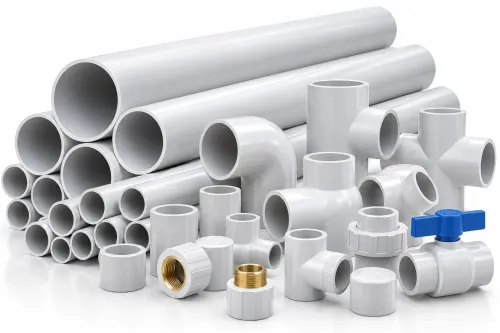
| Mechanical coupling | Hand tools, compatible seals and restraint checks | Inaccessible fusion points, dissimilar materials or rapid repairs |
Mechanical couplings solve access problems, but every coupling adds a potential leak and restraint point. An attractive fusion bead does not prove integrity; contamination, misalignment, wrong temperature, low pressure or movement during cooling can still weaken the joint.
For critical work, require operator qualification, equipment calibration, alignment checks, visual inspection, fusion logs and destructive or non-destructive qualification testing. Pressure-test the completed line after installation.
Protect the joint and pipe through the ground as well. Compact haunch material evenly, use suitable embedment around rocky trenches, control settlement, respect the pipe’s minimum bend radius and protect road crossings from concentrated loads. Trenchless pullback also needs a verified bore profile, pullback-load check and inspection for scraping or buckling.
These controls matter whether you are installing HDPE pipe Pandhurna contractors specify for water, irrigation or utility crossings.
When does HDPE outperform PVC, metal and concrete on total project effort?
HDPE outperforms alternatives when transport, lifting, trench disruption, leak exposure and future repairs cost more than the fusion setup. Its lower weight reduces vehicle loads and manual handling, while continuous fused joints reduce coupling count and potential leak points.
| Option | Material and transport | Installation and maintenance |
|---|---|---|
| HDPE | Lightweight; lower lifting effort | Fusion needs equipment, power, trained operators and clean alignment; fewer joints and simpler repairs |
| PVC/UPVC | Often economical for straight runs | Rigid pipes need careful joint handling and alignment changes; damaged sections need fittings or replacement |
| Ductile iron | Heavy transport and lifting | Rigid, with established fittings; requires corrosion protection and heavier trench support |
| Galvanised iron | Costly for long buried runs | Useful for selected exposed or threaded connections; threaded joints add leak and corrosion points |
| Concrete | Heavy delivery and placement | Suits structural drainage; less flexible and difficult to repair or alter |
Choose HDPE only after pricing the complete installation, including fusion-machine hire, operator qualification, generator or power supply, end preparation, cooling time and controlled bedding. An industrial HDPE pipe run also needs suitable access for fusion and protection from point loading during backfill.
Compare hydraulic performance by actual internal diameter, not nominal size. SDR changes wall thickness and bore, so include friction, fittings, valves, entrance losses and fouling assumptions before claiming a smaller pump or pipe.
Use this decision checklist:
- Price transport, lifting, trench restoration and repair access.
- Verify each zone’s static, shutoff and transient pressure against its SDR.
- Provide air-release valves, non-return valves, surge vessels or controlled valve closure when analysis identifies water hammer risk.
- Reject fusion savings if the crew lacks qualified operators, calibrated equipment or a controlled work area.
What should you ask an HDPE supplier before awarding a Pandhurna utility contract?
Before awarding the contract, require a supplier file rather than accepting a diameter-and-price quote. For an HDPE pipe manufacturer Pandhurna, ask for:
- Material designation, outside diameter, wall thickness, SDR and pressure class
- Operating-temperature limits, batch number and traceability from each pipe to its production batch
- Dimensional inspection results and hydrostatic or pressure-test records
- Fusion procedures, equipment calibration records, operator qualifications and the proposed repair method
For water mains, require conformity to the specified edition of IS 4984:2016, Polyethylene Pipes for Water Supply. For sewer, drainage, conduit or industrial chemical duty, name the standard that matches that service; “HDPE pipe for utility contractors” is not a complete specification.
Confirm chemical compatibility for the exact concentration, temperature and exposure period. “HDPE is chemically resistant” does not approve every agricultural or industrial chemical.
| Decision factor | Compare | Evidence to request |
|---|---|---|
| Installed cost | Pipe, trenching, fusion, fittings and testing | Itemised quotation |
| Maintenance | Leak exposure, repair access and spare fittings | Repair method and jointing plan |
| Connections | Butt fusion, electrofusion or mechanical couplings | Procedure and operator records |
| Pressure performance | Static, operating and transient pressure | Test records and design calculations |
Geeta Plasticwood Industries can be compared with other local sources when it provides this evidence and matches the specification to the duty rather than quoting diameter alone.
Related product
 | HDPE PIPE Product Details: Size/Diameter 110 mm Material Grade PE 80 Brand Geeta Plastic Country of Origin Made in India Keeping in mind the current market... View product → |
Frequently asked questions
Which Pandhurna utility conditions make HDPE a practical choice?
HDPE suits sites with seasonal ground movement, rocky soil, trench settlement and road crossings because its flexibility absorbs moderate alignment changes and its impact resistance helps during handling and installation.
How do you check whether a 110 mm HDPE pipe fits the duty?
Confirm the outside diameter, SDR or wall thickness, pressure rating, required flow, operating pressure, temperature, burial depth and installation loads before selecting 110 mm HDPE pipe.
Which HDPE jointing method suits the site and the crew?
Use butt fusion when the crew has suitable equipment and enough working space for aligned pipe ends. Use electrofusion where access is restricted or repairs and connections require compact fittings, provided the crew is trained and follows the fitting manufacturer's procedure.
When does HDPE outperform PVC, metal and concrete on total project effort?
HDPE can reduce handling, breakage, joint count and leak risk on projects involving difficult ground, road crossings or long continuous runs. Compare trenching, transport, installation, jointing, testing and future repairs rather than pipe price alone.
What should you ask an HDPE supplier before awarding a Pandhurna utility contract?
Ask for the pipe standard, outside diameter, SDR, pressure class, resin and batch traceability, test certificates, delivery lengths, fusion procedures, installer qualifications, warranty terms and site-support arrangements.
Keywords